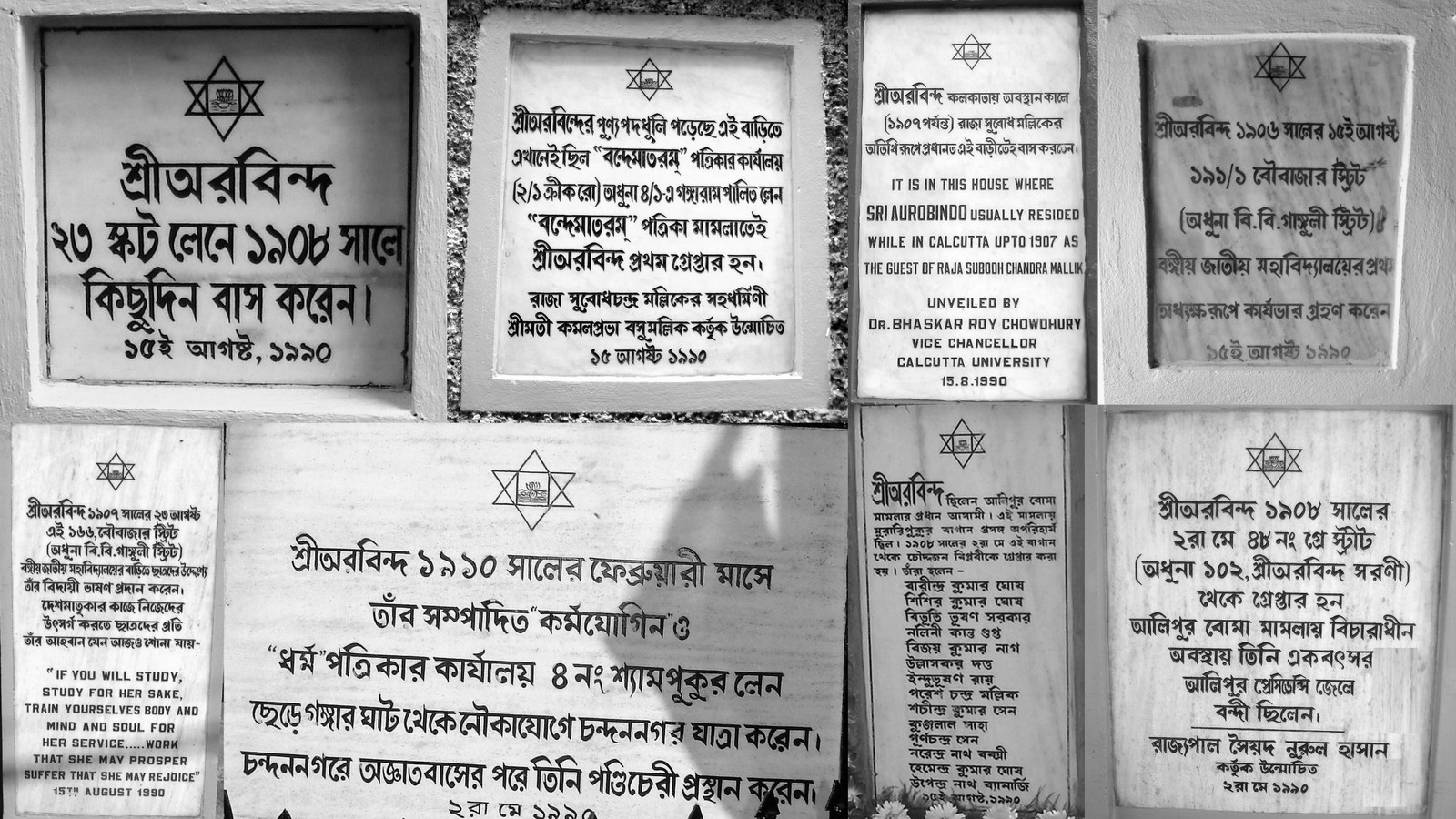
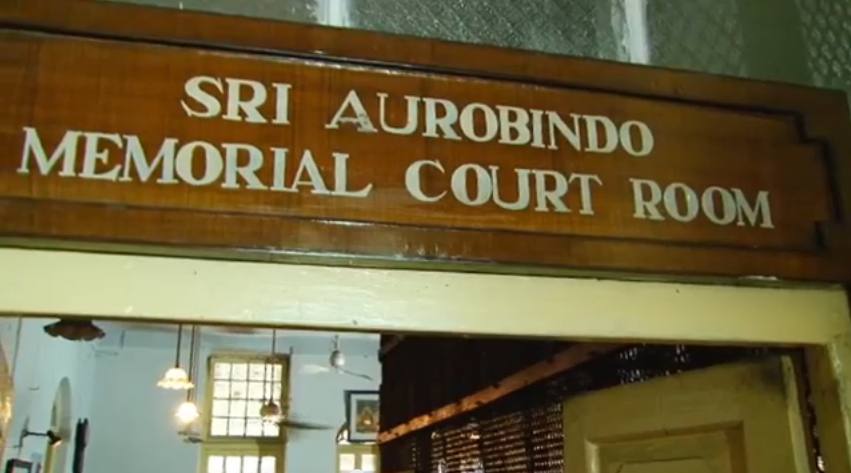
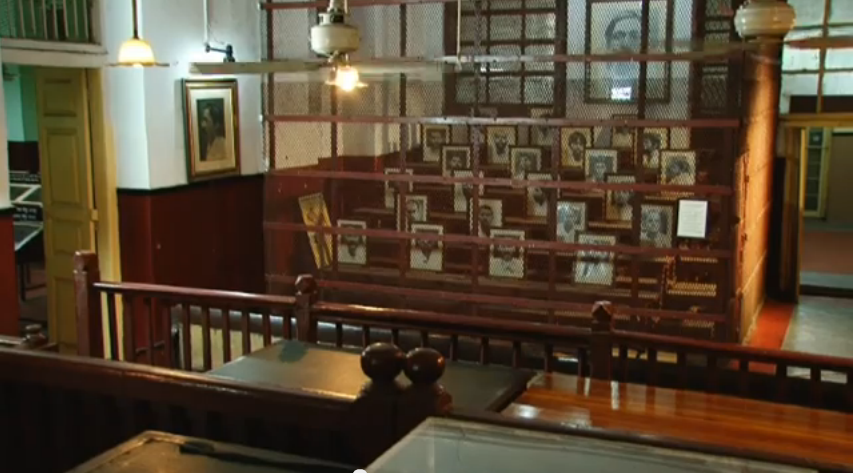
Memorial Plaques were erected at places in Calcutta where Sri Aurobindo had stayed at or worked from.

  • His foot-prints in Calcutta - a Pilgrim's Map

The sites were identified by "Sri Aurobindo and Calcutta Memorial Committee". In co-operation with the Calcutta Municipal Corporation, Memorial Plaques were erected at these identified sites.

Joya di was one of the first Pilgrims and this was a consummation of her long and laborious endeavour.

12, Wellington Square


Sri Aurobindo usually resided in this house since his return to Calcutta, uptill 1907, as a ....

2/1, Creek Row


.... finally on 12th October 1906, the 'Bande Mataram' permanent office was .....

19/3, Chakku Khansama Lane


.. Sri Aurobindo stayed here for....

191/1, Bowbazar Street


... Bengal National College, with Sri Aurobindo as its first Principal, functioned ....

164 & 166, Bowbazar Street


.. Bengal National College was shifted..

23, Scott Lane


.. Sri Aurobindo resided for sometime at 23,..

32, Muraripukur Road


.. The Garden House at 32, Muraripukur Road was an important part of the Alipore Bomb trial, of which ...

48, Grey Street


.. Sri Aurobindo was arrested from 48, Grey Street to ....

6, College Square


.. After his release on 6th May, 1909, Sri Aurobindo ....

4, Shyampukur Lane


.. It was here that Sri Aurobindo 'received a sudden command from above to ....

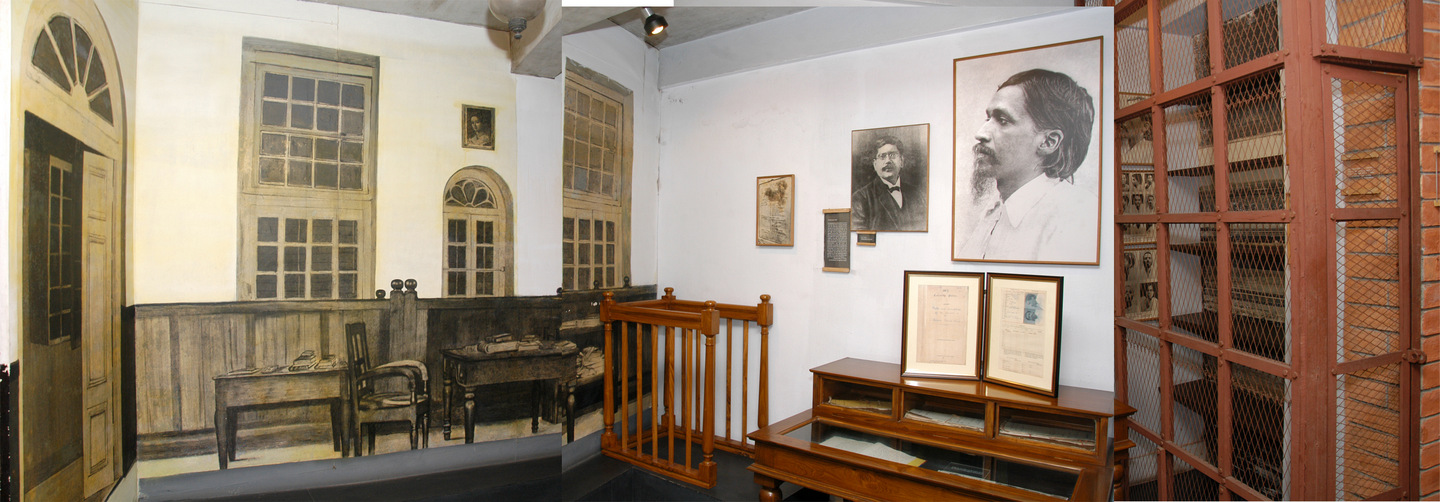
This video relives Calcutta's association with Sri Aurobindo for the period 1906-1910. It describes the fruition of Joya di's endeavour to put up Memorial Plaques at those places in Calcutta where Sri Aurobindo had stayed at or worked from.

12:22

"Friday, May 1, 1908 ... I did not know that that day would mean an end of a chapter of my life, and that there stretched before me a year's imprisonment during which period all my human relations would cease, that for a whole year I would have to live beyond the pale of society, like an animal in a cage. And when I would re-enter the world of activity it would not be the old familiar Aurobindo Ghose .... I have spoken of a year's imprisonment. It would have been more appropriate to speak of a year's living ... in an ashram or a hermitage .... The only result of the wrath of the British Government was that I found God."

From the english translation of Karakahini by Prof. Sisir Kumar Ghosh

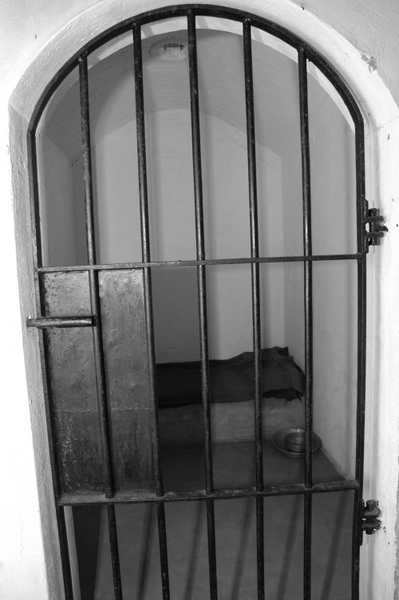
KARAKAHINI (Tales of Prison life) is Sri Aurobindo's account of his experiences as an undertrial prisoner in Alipore Jail, Calcutta. It is written in Bengali.

This video is a reading from "Kara-Kahini' with additional scripting by Supriti Mukhopadhyay. Supriti Mukhopadhyay brings to life the events that led to Sri Aurobindo's incarceration and stay at Presidency Jail from May 5, 1908 till his release on May 6 1909. The pathos, the wit, the sarcasm, the irony in Sri Aurobindo's writing find expression in Supriti's reading.

The Master's solitary confinement in a 9 by 6 cell, the small courtyard in front of his cell where he was finally allowed to take a stroll twice a day, the ubiquitous bowl which served a dual purpose, visits to the courtroom for attending the trial proceedings, seeing Krishna everywhere, every such detail penned by Sri Aurobindo is made vivid by a masterly reading by Supriti Mukhopadhyay a century later.

KARAKAHINI (Tales of Prison Life) was first serialized in nine parts in the Bengali monthly, Suprabhat in 1909-1910. This series remained incomplete as Sri Aurobindo left Bengal in 1910. KARAKAHINI came out in book-form in 1920 from Chander-nagore.

1:09:39

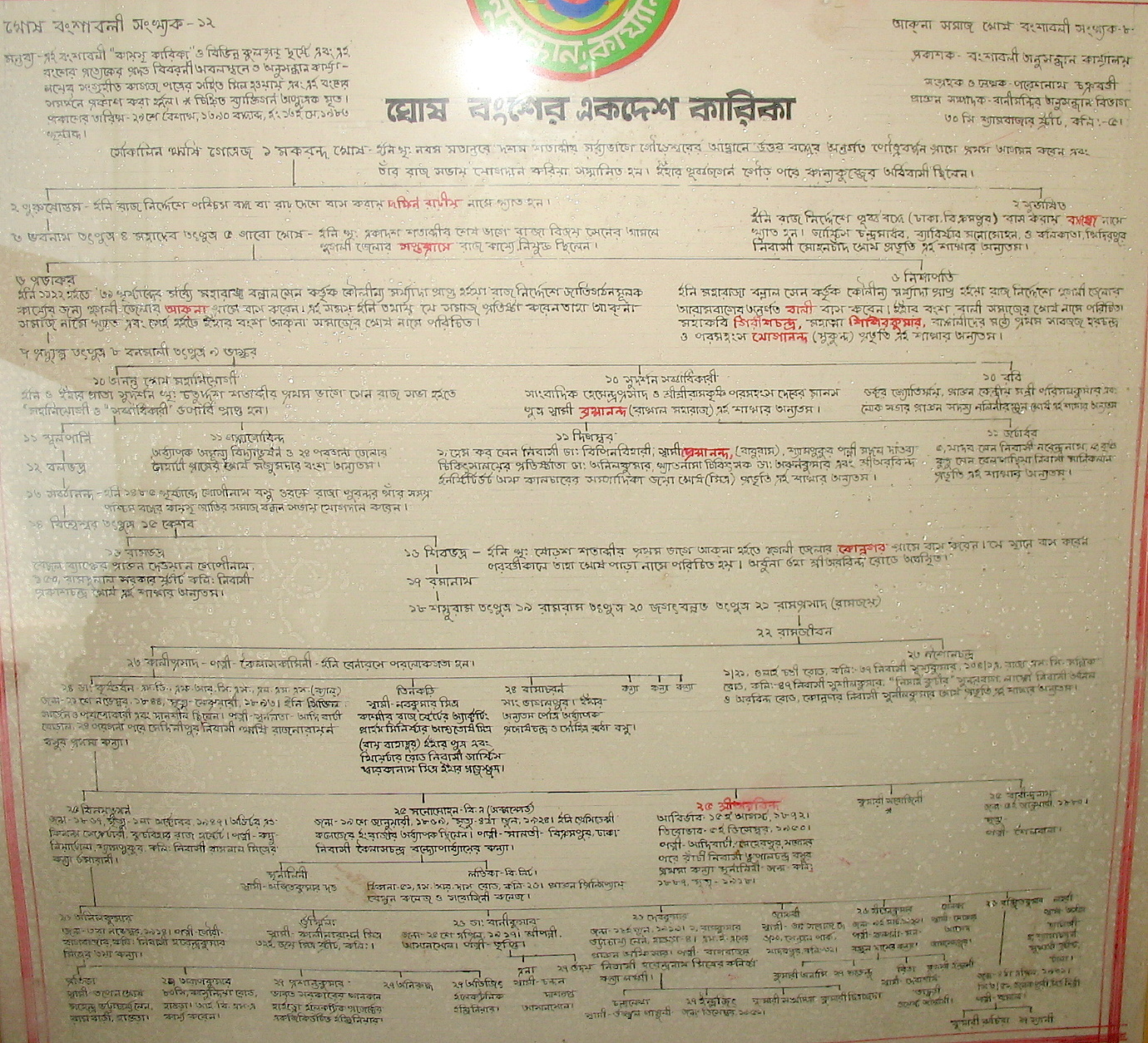
Sri Aurobindo Family Tree


All extracts and quotations from the written works of Sri Aurobindo and the Mother and the Photographs of the Mother and Sri Aurobindo are copyright Sri Aurobindo Ashram Trust, Pondicherry -605002 India.
All other Rights and Content Reserved - Copyright © Sri Aurobindo Institute of Culture (SAIoC).